
Today’s price comes from the world of mergers and acquisitions. Snowflake, according to the WSJ, has priced its IPO at the top end of the range in a deal that values the company at $30B. This is a thing people say a lot in the news – what does it mean?
To start, we know that price is just the intermediary point between supply, demand, and negotiating power.
When Snowflake hired its bankers, it went around the country pitching the value of the company to investors. The investors are buyers, and Snowflake management are effectively selling a share in part of the company to raise money and grow.
Oversimplified, the bankers are “building a book” of who will buy and at what price. This is the demand. The supply is the fixed share in the company – in this case say ~20%. As they haggle with investors, the bankers are in essence building a demand curve.
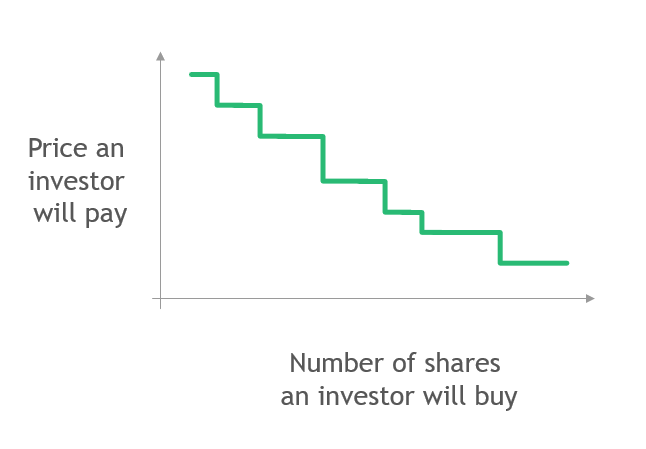
The more money an investor gives the company, the lower price they should expect. Say Snowflake is selling 20% of the company. So if a single investor gives them $6B (20% of a $30B valuation) it should expect the lowest possible price in the range. This would end up putting the price all the way to the right hand side of the chart.
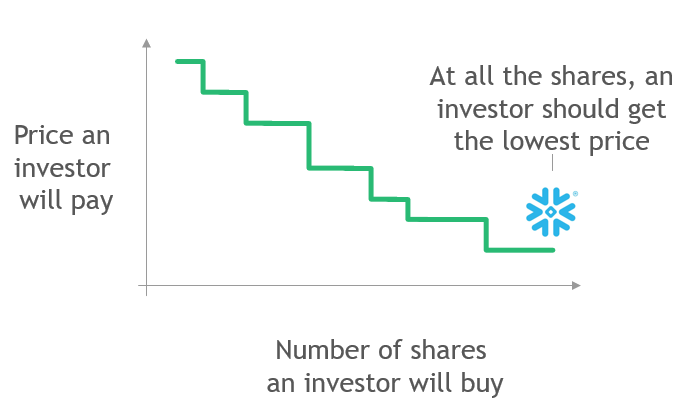
Obviously though very few people are just going to hand over $6B – it’s a pretty big bet to make! So there are other investors in the market.
Eventually what happens is that the investors, bankers, and the company land on an acceptable price where some were willing to pay more (and feel like they got a deal) and some wanted to pay less. Those who wanted to pay less pass on the deal.
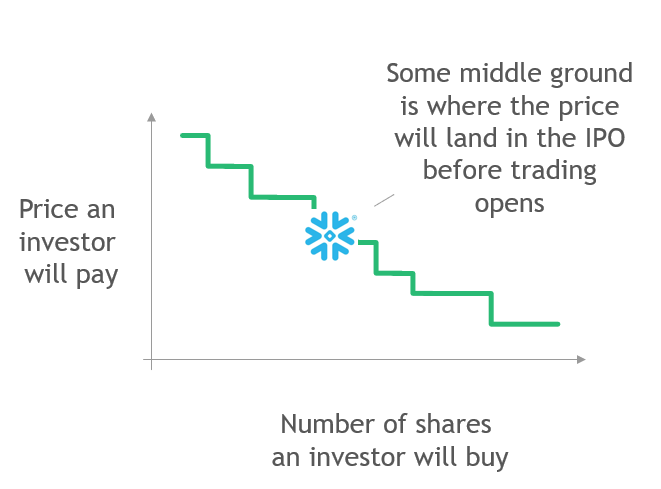
So when more news comes out about the price of an IPO, it’s really just a question of supply, demand, and power of the players haggling over a piece of the company.
 The Lemonade Problem